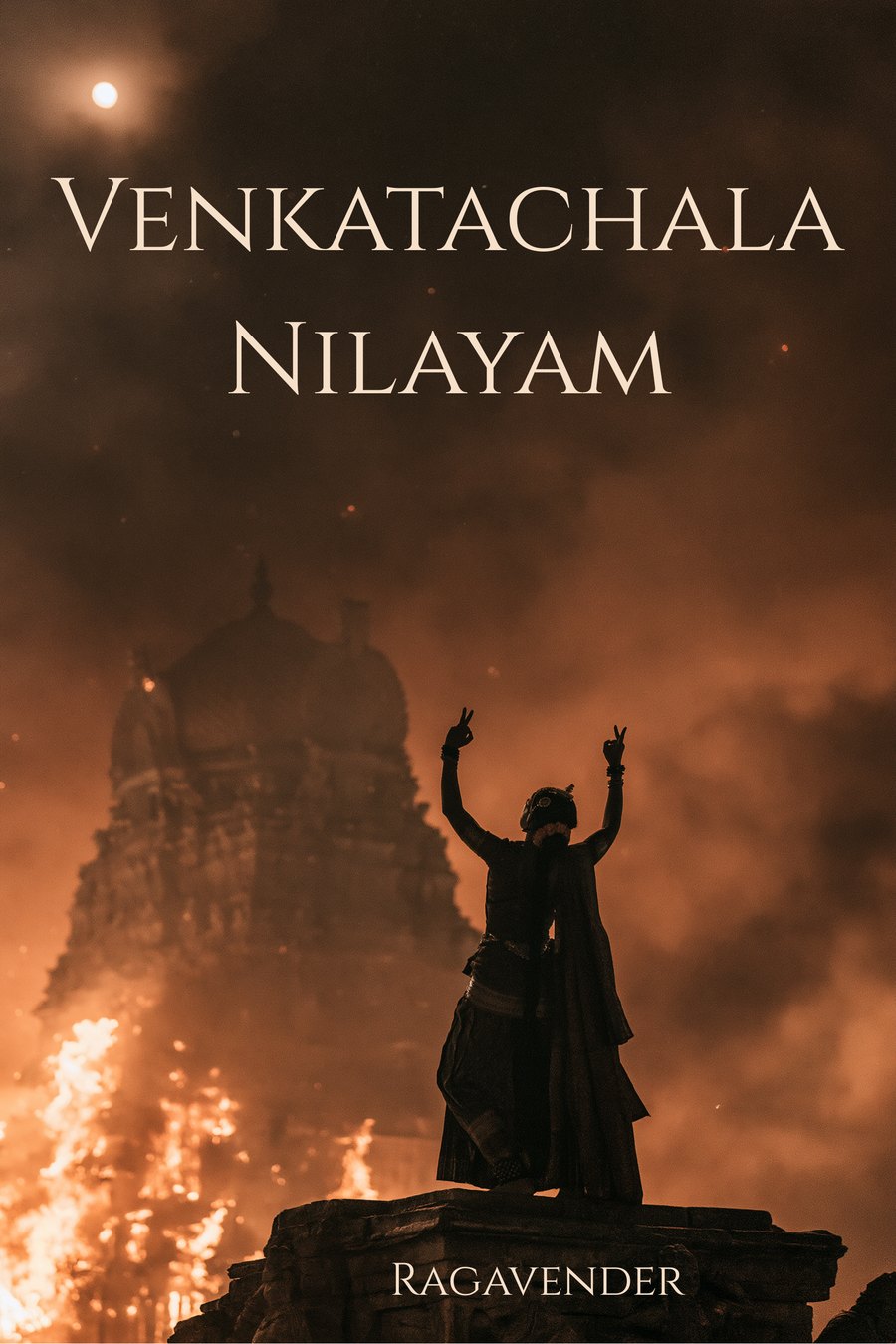
The Vellai Gopuram (வெள்ளை கோபுரம்), or White Tower, is the eastern gateway tower of the Sri Ranganathaswamy temple at Srirangam. It stands nearly 144 feet tall on the east side of the temple’s fourth enclosure, and it is the only one of the temple’s gopurams that is painted white.
The temple says the white is a memorial. It honours Vellayi, also remembered as Vellaiyammal or Vellai Ammal, a dancer of the temple who is said to have given her life for the Lord when an army invaded in the fourteenth century.
Ask how long it has been white, and you will get the answer one of the temple’s senior priests once gave: for ages.

In 1323 an army of the Delhi Sultanate marched south to Srirangam. It was led by Ulugh Khan, son of Sultan Ghiyasuddin Tughlaq, who within two years would himself be Sultan, as Muhammad bin Tughlaq.
It was the second attack in twelve years. Malik Kafur had come in 1311, but the historian V. N. Hari Rao called that only a raid. This time, he wrote, the army occupied the temple and turned it into a fortified camp.
The temple’s utsavar, Namperumal, had to be taken out before the soldiers found him. The acharya Pillai Lokacharya led the small group that carried him away to the south. They needed time, and they needed the army to be looking somewhere else.

What happened next was not written down in the chronicles. It has been passed down by the people of Srirangam, and this is how they tell it.
The soldiers were searching the temple. Vellayi, a devadasi, a dancer dedicated to the temple, went before the commander of the army and danced for him. Some say she danced for hours.
The commander wanted more than a dance. She promised to show him where the Lord’s idol was, and led him up the eastern tower. At the top, as he leaned out to look down, she pushed him off.
Then, the story goes, she jumped after him.

Down below, in the time she had won for them, Pillai Lokacharya’s party slipped away with the Lord.
When Namperumal finally came home in 1371, after forty-eight years away, the eastern tower was named after her. One version says it was Kumara Kampana of Vijayanagara who gave it her name. The temple says the tower has been painted white in her memory ever since.
No one can say today how much of this really happened. Sri R. Krishnamachari, who edited the temple’s chronicle, the Koil Olugu, called the story of the naming hearsay. Even the people who tell it do not agree. In one version, Vellai Ammal leads a group of the temple’s dancers who lure the soldiers into a death trap.
The tower itself is real. It still stands at the eastern entrance, white among the coloured towers. At its foot, the historian R. Kalaikovan points out a rare sculpture of Vishnu that combines the Ananda Thandava with the Kalinga Narthanam, Krishna’s dance on the serpent Kaliya. It is a dancing Lord, at the foot of a dancer’s tower.

If you visit, stand under it and look up to the top tier. Then imagine climbing it in the dark, beside a man you mean to kill.
The temple remembers that Namperumal left Srirangam that night. What if the party slipping through the gate was carrying more than one Lord?
a novel